

Regulation of endoplasmic reticulum-associated degradation (ERAD)
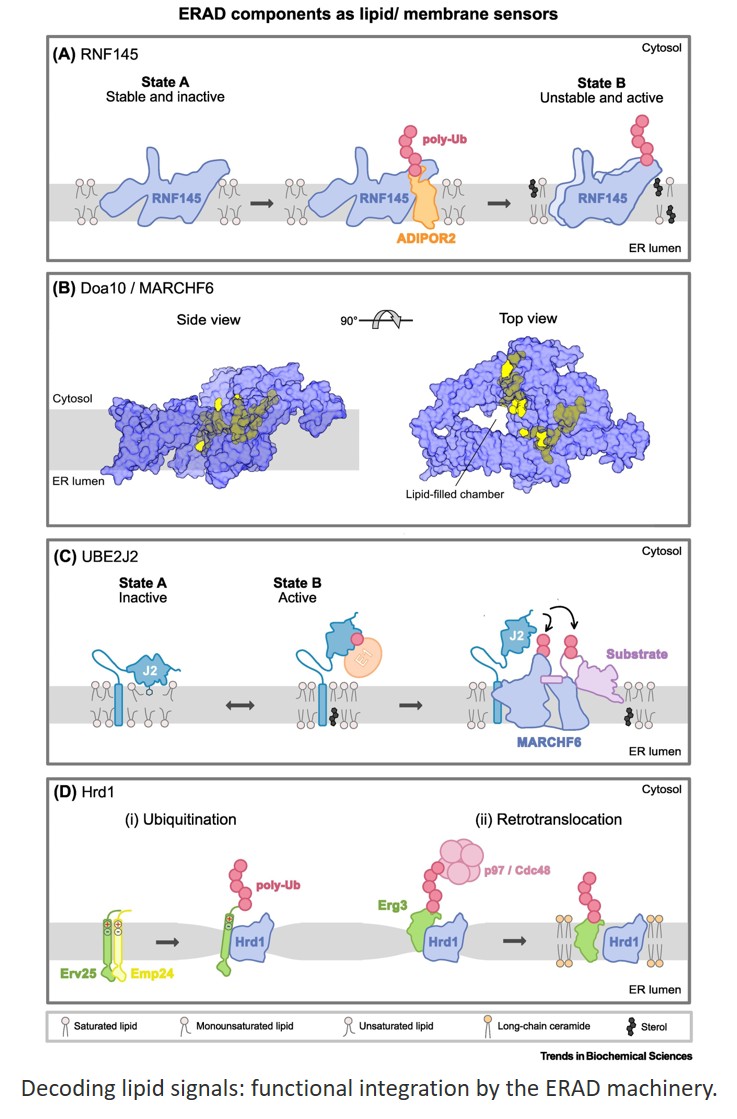
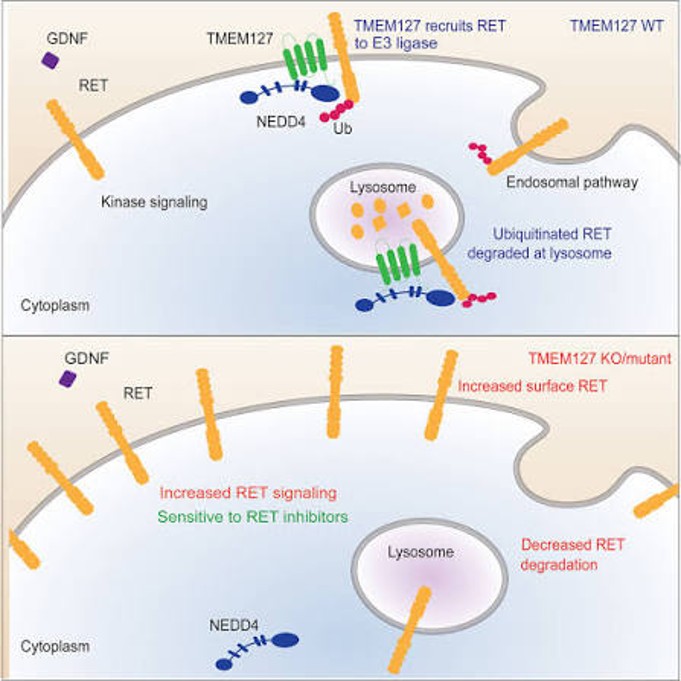
Endoplasmic reticulum-associated degradation controls membrane lipid homeostasis by regulating the abundance of lipid biosynthetic enzymes, signaling receptors, and transcriptional regulators at the endoplasmic reticulum.
Membrane proteins exist near conformational tipping points where small changes in the lipid environment can shift populations toward endoplasmic reticulum-associated degradation permissive states—a framework termed marginal stability.
Specific lipids and collective membrane properties affect every processing step in endoplasmic reticulum-associated degradation: recognition, ubiquitination, and extraction of membrane protein substrates.
In addition to the stabilization of endoplasmic reticulum-associated degradation-permissive conformational states of substrates, lipids and membrane properties directly influence the structure and activity of the endoplasmic reticulum-associated degradation machinery.
https://www.cell.com/trends/biochemical-sciences/fulltext/S0968-0004(26)00214-8