

Restoring aging T cell function to fight cancer
In a new study, the researchers explore the causes of immune aging, a barrier to successful cancer immunotherapy, and identify a gene that may serve as an age-related prognostic marker and potential target for future cancer therapies.
The paper was published in the journal Cell.
As a person gets older, their immune system becomes worse at fighting disease. This age-related immune decline, also known as immune aging, is a critical barrier to successful cancer immunotherapy. However, we still do not fully understand what causes immune aging, making it difficult to identify drug targets that could help overcome this barrier.
In their prior work, the authors found that the aged tumor microenvironment (TME) pushes CD8+ killer T cells toward dysfunction, reducing their ability to fight cancer. Therefore, our goal is to identify new ways to reinvigorate CD8+ killer T cells in the TME and make them more effective by improving their persistence and tumor-killing capacity.
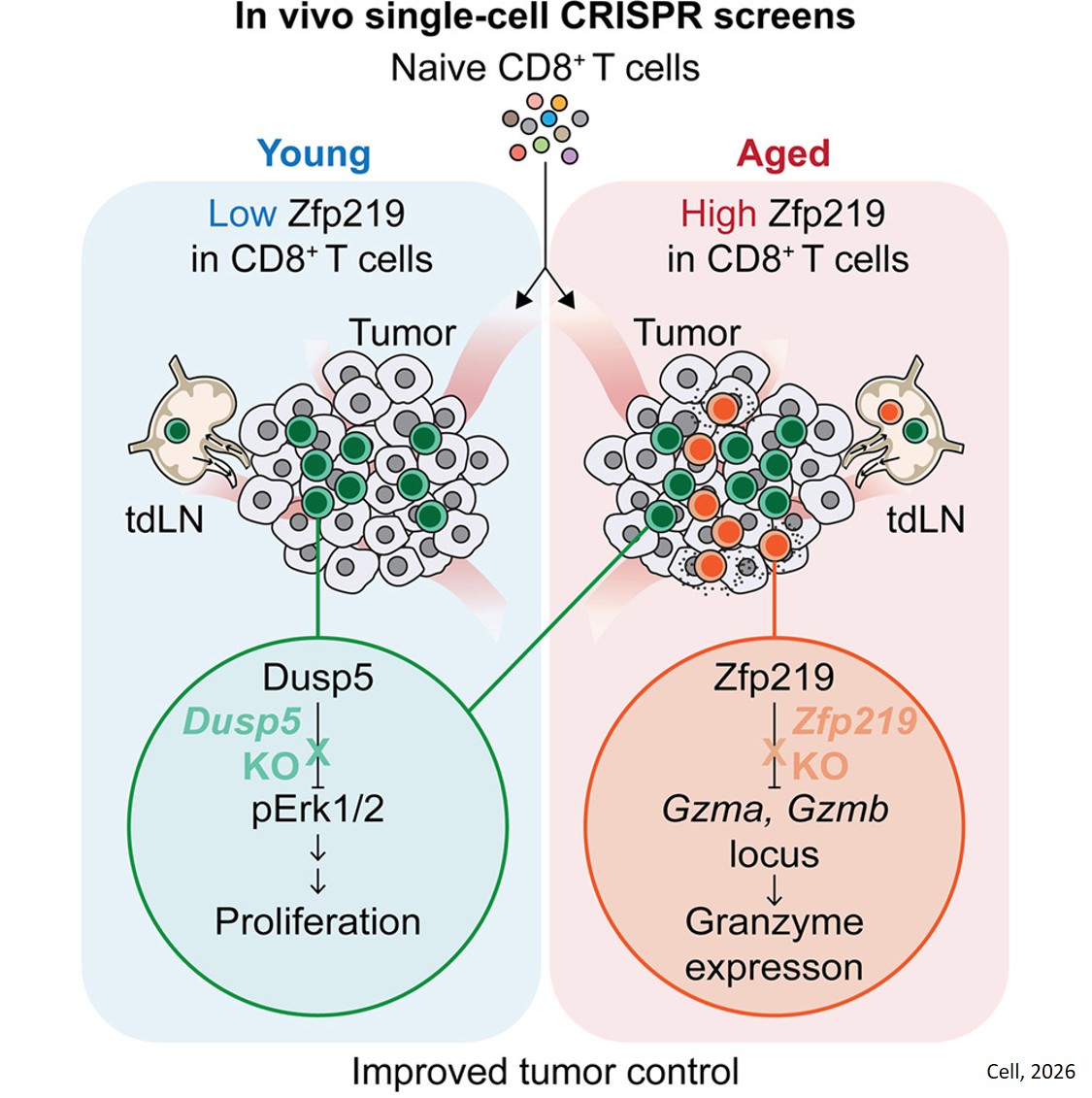
To achieve this goal, the authors performed a “CRISPR pooled screen,” making changes in multiple genes simultaneously to figure out the best possible target rather than studying genes one at a time. This approach allowed them to identify the regulators of T cell dysfunction within the aged TME in a scalable and efficient way. They developed this screening method using aged tumor-bearing mice, whose tumor microenvironment closely mimics what tumor cells and T cells encounter in older cancer patients.
The results suggest that dual specificity phosphatase 5 (Dusp5) and zinc finger protein 219 (Zfp219) are two key regulators of T cell dysfunction, which leads to poor tumor control in aged hosts.
Dusp5 acts as a “brake” on ERK signaling pathways that help T cells increase in number. When Dusp5 is removed, ERK signaling becomes more active, allowing T cells to proliferate more effectively.
Zfp219 acts as an "off switch" for genes involved in producing granzymes, tumor-fighting enzymes. When Zfp219 is knocked out, T cells increase secretion of granzymes (e.g., GZMA, GZMB), making them better at killing tumor cells.
The researchers found that older adults have higher levels of ZNF219, the human counterpart of the mouse gene Zfp219, in T cells within their tumors. Higher ZNF219 levels were also associated with poorer responses to immune checkpoint blockade and shorter survival, likely because these T cells do not efficiently kill tumor cells. Therefore, ZNF219 could serve as a new age-related prognostic marker for cancer patients.
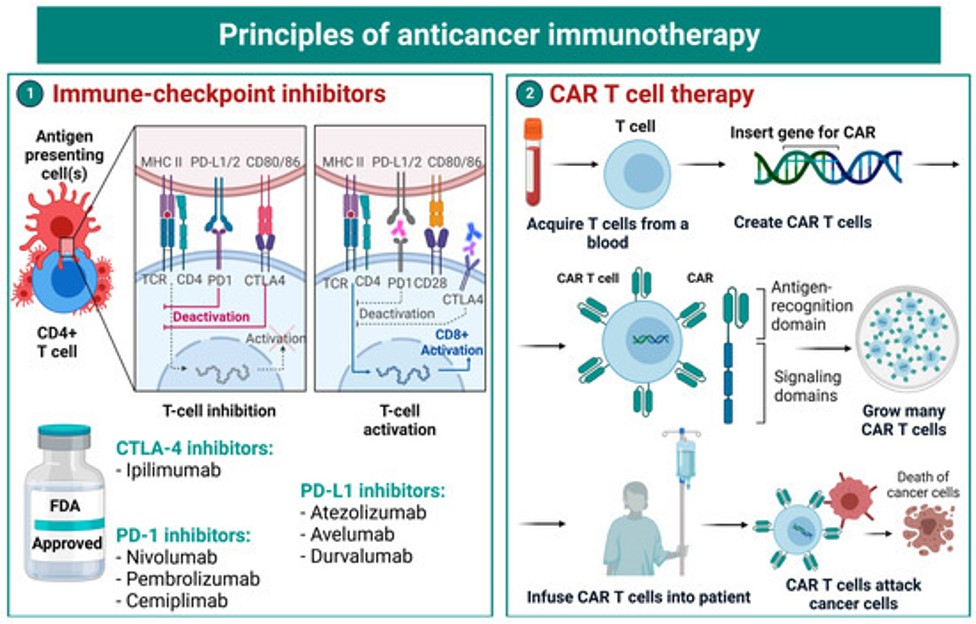
Moreover, blocking ZNF219 activity could be a promising approach to improving T cell function as a cancer treatment for older adults. Although ZNF219 itself is difficult to target with drugs, newer approaches that genetically modify a patient's own T cells, such as CAR-T cell therapy or other engineered T cell treatments, may provide a practical way to reduce ZNF219 activity and strengthen the body's ability to fight cancer.
https://www.cell.com/cell/abstract/S0092-8674(26)00814-7