

Pathogenic angiogenesis and abnormal vascular function in early human Alzheimer’s disease
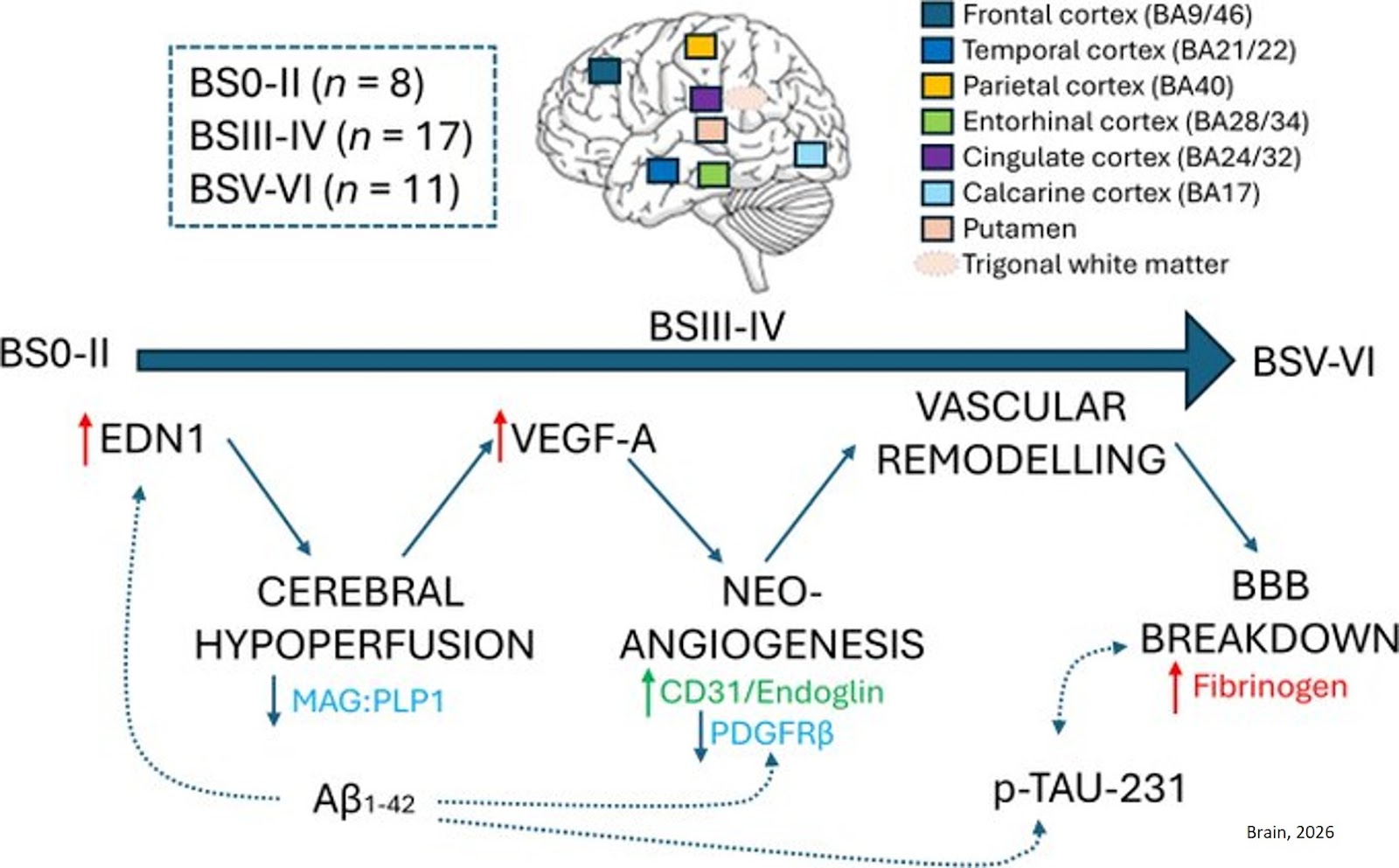
In Alzheimer’s disease (AD), cerebral hypoperfusion and blood–brain barrier (BBB) leakiness are the common pathological features but it is not clear if these pathologies are the result of AD or the cause.
By analysing post-mortem brain tissue, the researchers show that reduced blood supply in AD promotes the growth of new but leaky blood vessels.
The study highlights a complex and dynamic temporal relationship, beginning in early-stage AD, between mediators of cerebrovascular dysfunction and the regional spread of Aβ and tau pathology.
The study also identifies EDN1 and VEGF-A signalling as therapeutic targets to limit the cerebrovascular damage in early AD.
https://academic.oup.com/brain/article/149/4/1182/8296877
https://sciencemission.com/abnormal-vascular-function-in-early-AD