


Reversible disruption of NMDA receptor-dependent cortico-hippocampal circuits in Alzheimer’s disease
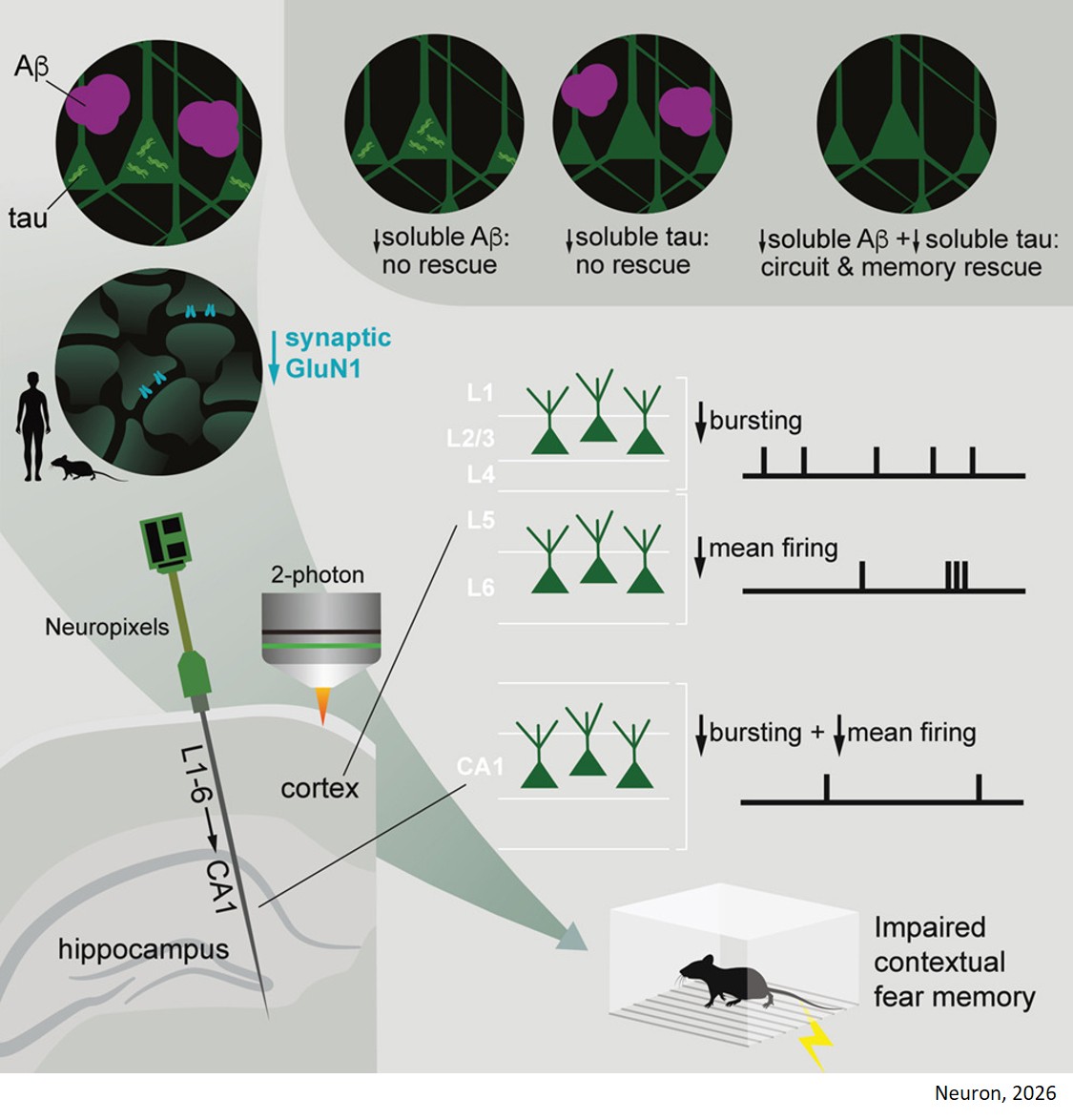
In Alzheimer’s disease (AD) as β-amyloid (Aβ) and tau accumulate, integrity of cortico-hippocampal circuits are compromised leading to memory impairment but, the mechanisms linking this pathology to circuit dysfunction remain unclear.
The researchers show that soluble Aβ and tau together disrupt structured activity across cortico-hippocampal circuits and impair memory, involving reduced burst firing in superficial cortical layers and CA1 and reduced mean firing of excitatory and inhibitory neurons in deep cortical layers and CA1.
They also demonstrate that combined Aβ-tau reduced synaptic NMDA receptor (NMDAR) density in both mouse and human tissue, while Aβ-tau co-reduction restored NMDARs and firing patterns and improved contextual memory.
They reveal reduced synaptic NMDAR (GluN1) localization as a reversible link between pathology and circuit dysfunction and show that simultaneous reduction of both proteins is essential to restore activity and memory.
https://www.cell.com/neuron/fulltext/S0896-6273(26)00132-7
https://sciencemission.com/Alzheimer%E2%80%99s-disease-pathology