

The local–systemic axis of the skeletal muscle secretome
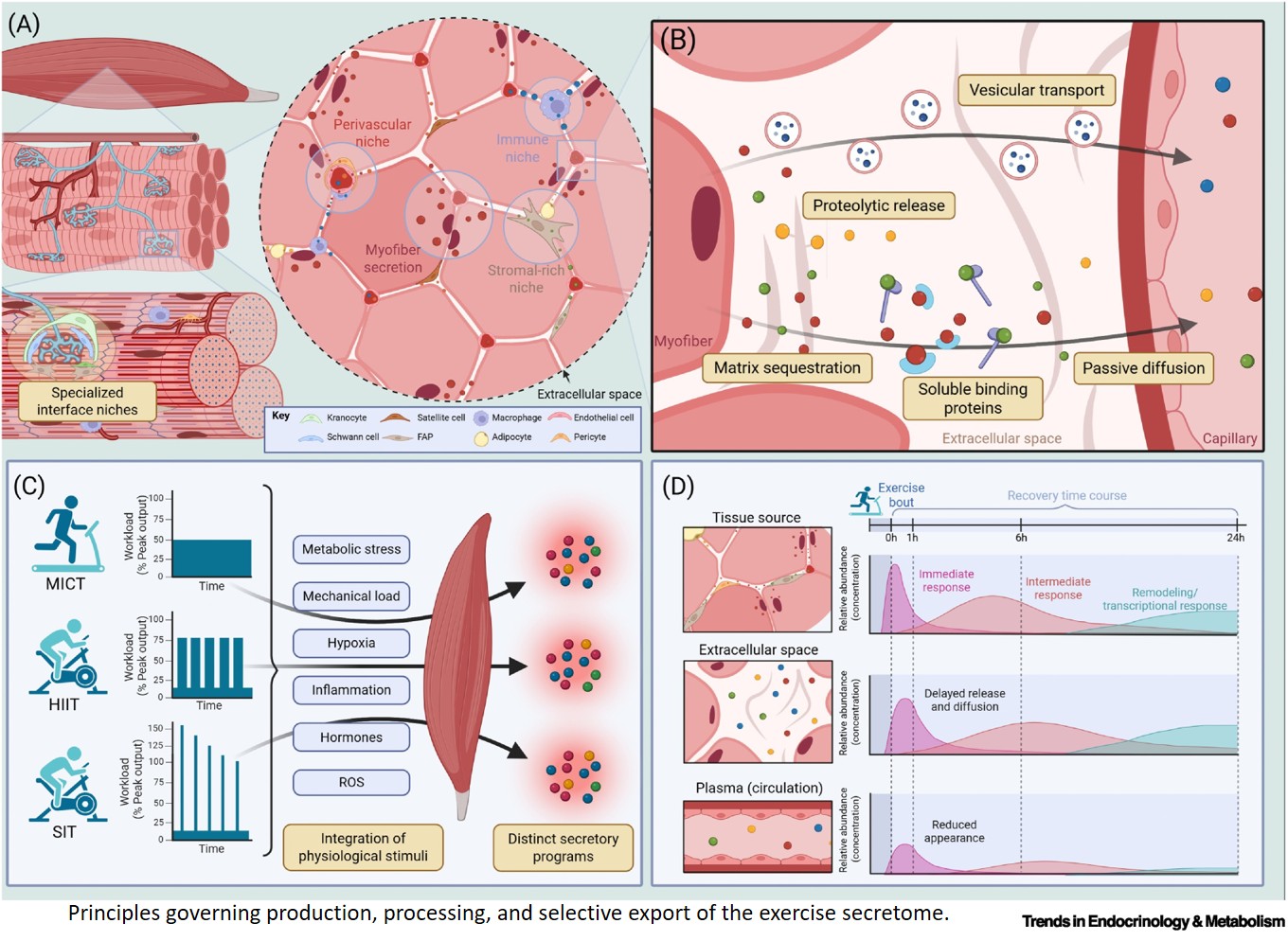
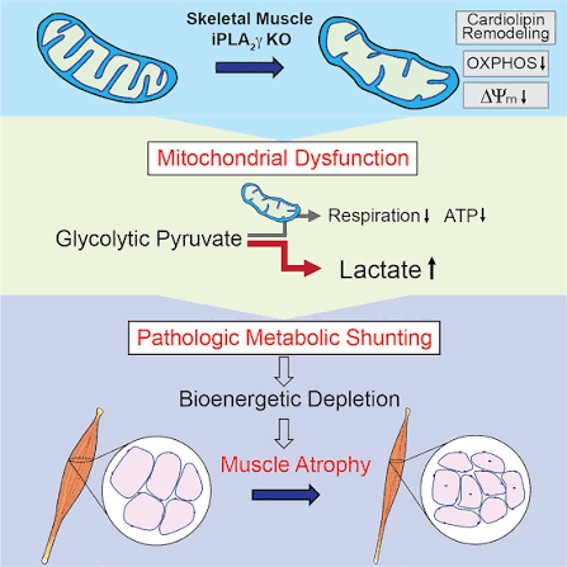
Skeletal muscle functions as a major auto-, para-, and endocrine organ that coordinates body-wide metabolism through a "local–systemic axis" driven by its secretome.
Composed of hundreds of signaling peptides, proteins, metabolites, and extracellular vesicles (EVs) collectively called myokines (at rest) and exerkines (during contraction), this secretome balances localized tissue health while directly remodeling distant physiological systems.
This dual-action framework governs muscle regeneration while protecting the body against metabolic, cardiovascular, and neurodegenerative decline.
At the tissue level, contracting or adapting muscle fibers release factors that immediately act on neighboring cells to manage muscle architecture, vascularization, and mass:
Factors like Insulin-like Growth Factor 1 (IGF-1) and Follistatin stimulate neighboring satellite (stem) cells to proliferate and fuse with existing fibers, driving muscle repair and growth. Conversely, Myostatin acts locally to restrict excessive muscle mass.
Muscle contraction triggers the local release of Vascular Endothelial Growth Factor (VEGF) and Fibroblast Growth Factor 2 (FGF-2), which prompt local endothelial cell migration to build a denser capillary network, optimizing local oxygen supply.
When released into the bloodstream, the muscle secretome acts as a systemic "endocrine code" that shifts body-wide tissue function:
Interleukin-6 (IL-6) was the first recognized endocrine myokine. Released in massive quantities during prolonged exercise, systemic IL-6 travels to the liver to accelerate glucose output and targets adipose tissue to increase lipolysis, matching systemic fuel availability to muscle energy demands.
Cleaved from the muscle membrane protein FNDC5 during exercise, Irisin enters systemic circulation and binds to white adipocytes. It triggers the "browning" of white fat into energy-expending beige fat, raising basal thermogenesis and improving overall insulin sensitivity.
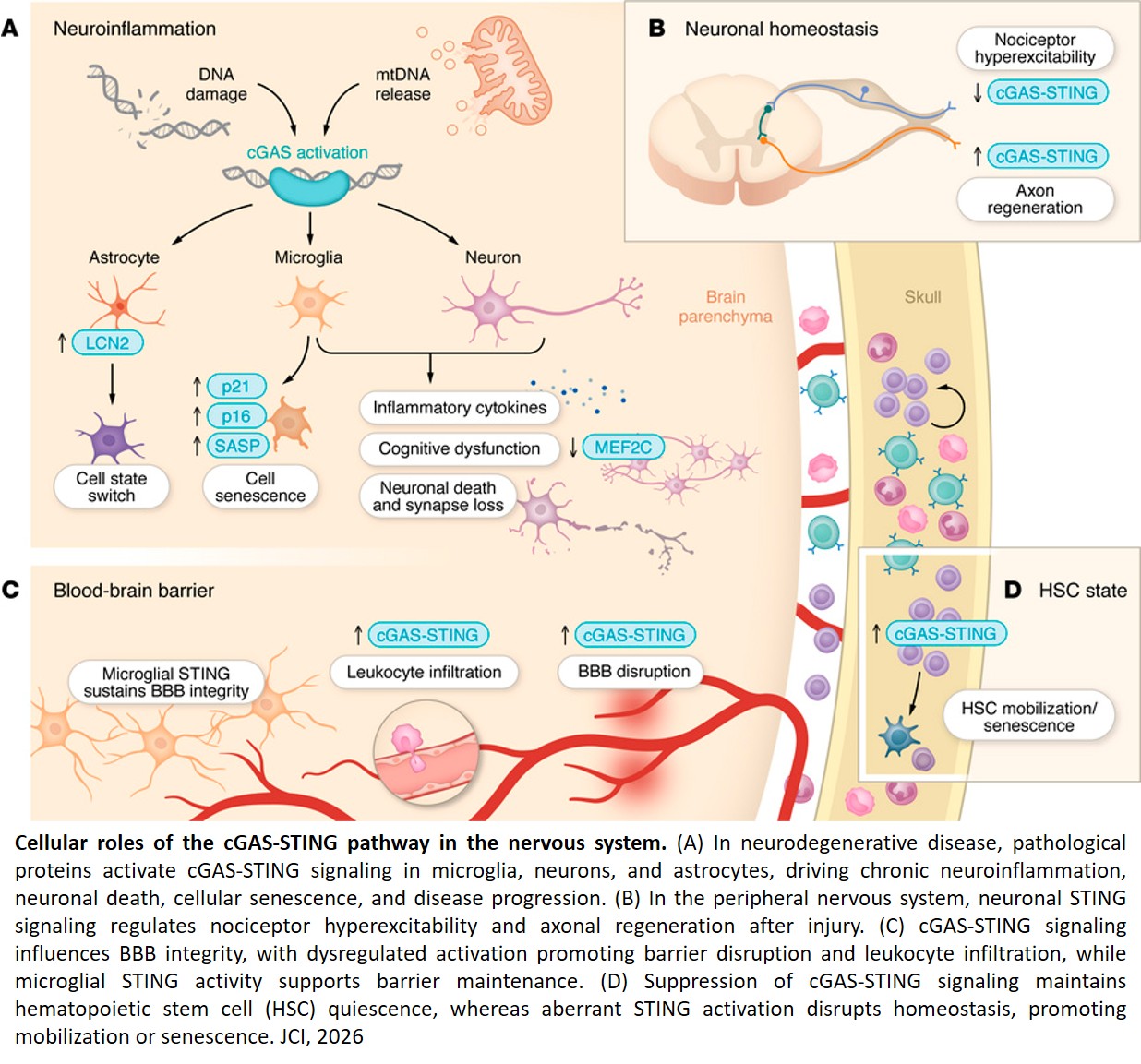
Exercise induces the muscular expression of Cathepsin B and irisin precursors, which cross the blood-brain barrier to upregulate Brain-Derived Neurotrophic Factor (BDNF) in the hippocampus, enhancing neurogenesis, memory, and cognitive resilience.
Myokines such as Osteonectin (SPARC) and IL-15 travel directly to skeletal structures, modulating the activity of osteoblasts and osteoclasts to align bone mineral density with muscular strength.
https://www.cell.com/trends/endocrinology-metabolism/fulltext/S1043-2760(26)00172-4