

How sensory neurons promote disease tolerance during viral infection
Neuroimmune interactions shape host responses to infection, but the molecular role of sensory neurons during viral infection remains unclear.
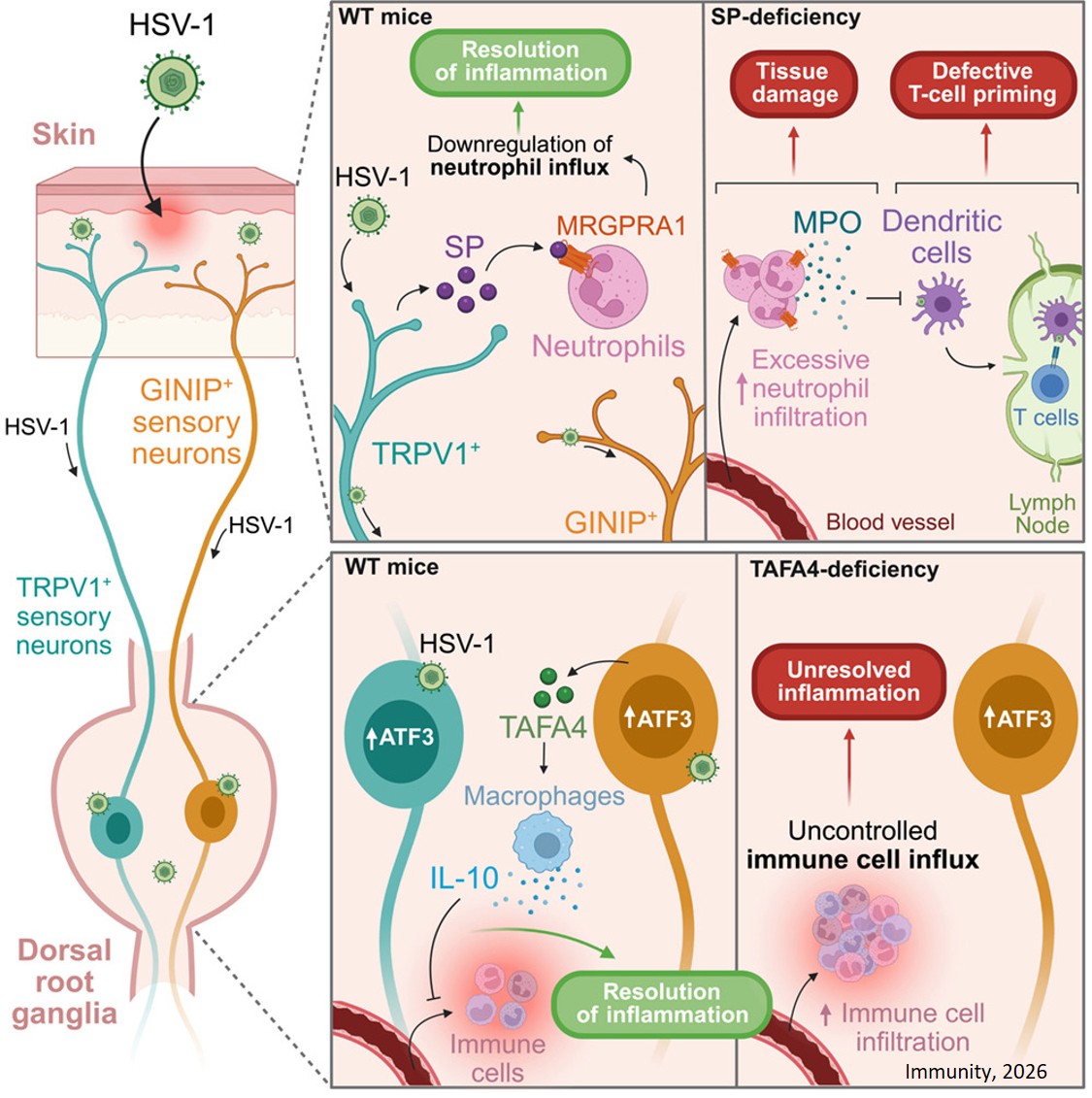
The researchers show that HSV-1-activated sensory neurons produce substance P and TAFA4, which act in a tissue-specific manner to modulate inflammation and promote disease tolerance without affecting viral clearance.
Mechanistically, in the skin, SP produced by transient receptor potential vanilloid type 1 (TRPV1)+ sensory neurons limited neutrophil infiltration through the Mas-related G protein-coupled receptor member A1 (MRGPRA1) receptor and promoted skin healing.
In infected DRGs, a TAFA4-interleukin (IL)-10 pathway promoted the resolution of inflammation after viral clearance.
https://www.cell.com/immunity/fulltext/S1074-7613(26)00043-9