

ER exit site regulation by post-translational modifications
Endoplasmic reticulum exit sites are dynamic hubs that integrate protein trafficking, quality control, and signaling rather than static export platforms.
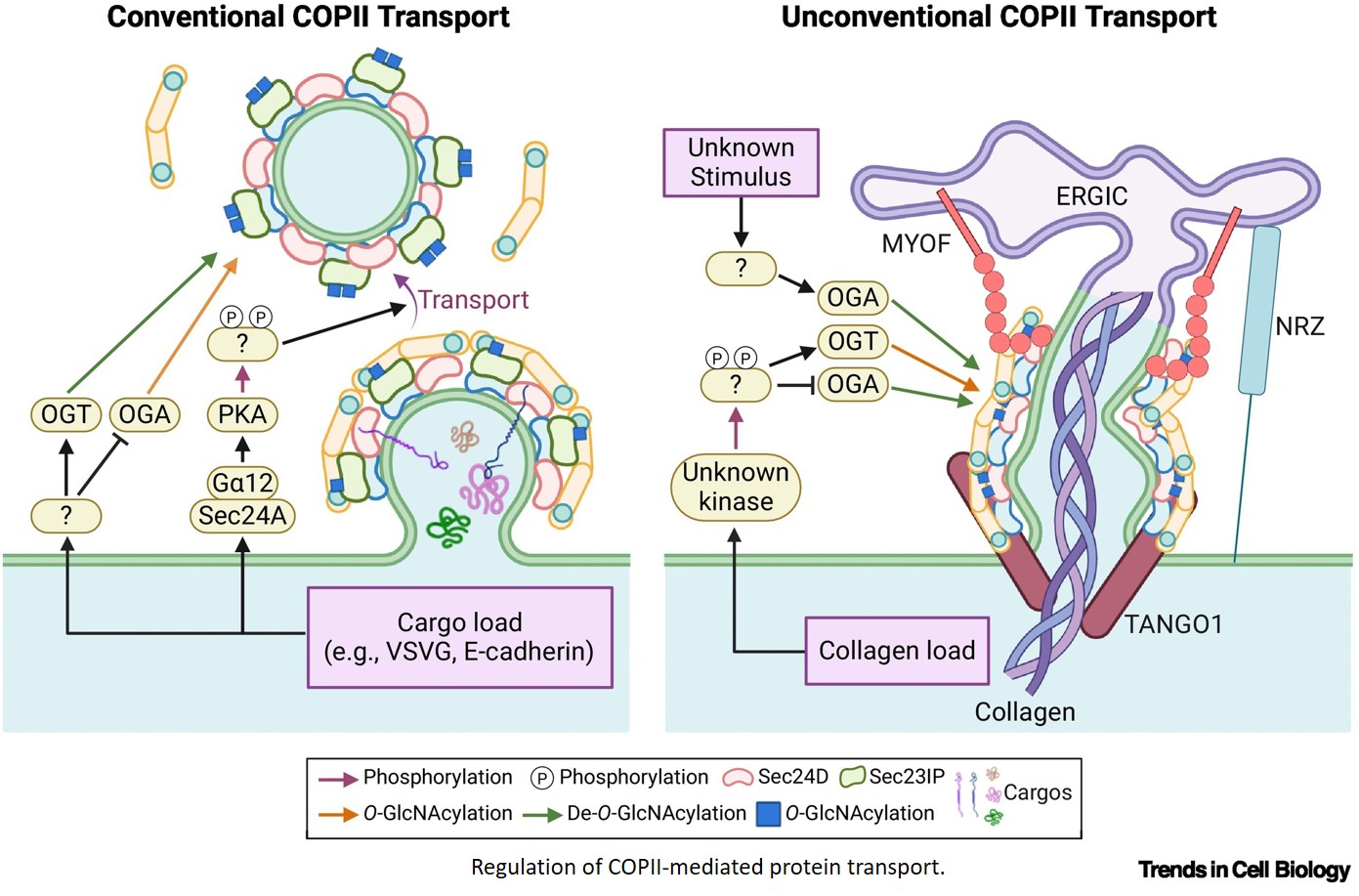
Post-translational modifications of coat protein complex II and other proteins rapidly and reversibly tune endoplasmic reticulum exit sites’ organization and function in response to cellular cues.
Post-translational modifications regulate endoplasmic reticulum exit sites’ biogenesis and liquid–liquid phase separation, linking signaling pathways to structural remodeling of the early secretory pathway.
Diverse post-translational modifications control cargo-specific transport from the endoplasmic reticulum, including specialized mechanisms for large cargos and selective client sorting.
Emerging roles for post-translational modifications extend endoplasmic reticulum exit sites/coat protein complex II functions to autophagy, endoplasmic reticulum-specific autophagy, and disease-relevant signaling pathways, highlighting their importance to cellular homeostasis.
#sciencenewshighlights #ScienceMission
https://www.cell.com/trends/cell-biology/fulltext/S0962-8924(26)00159-5
https://sciencemission.com/Remaking-an-exit