

How neurons protect cancer cells
How cancer cells exploit the tumor microenvironment to alleviate oxidative stress remains largely unclear.
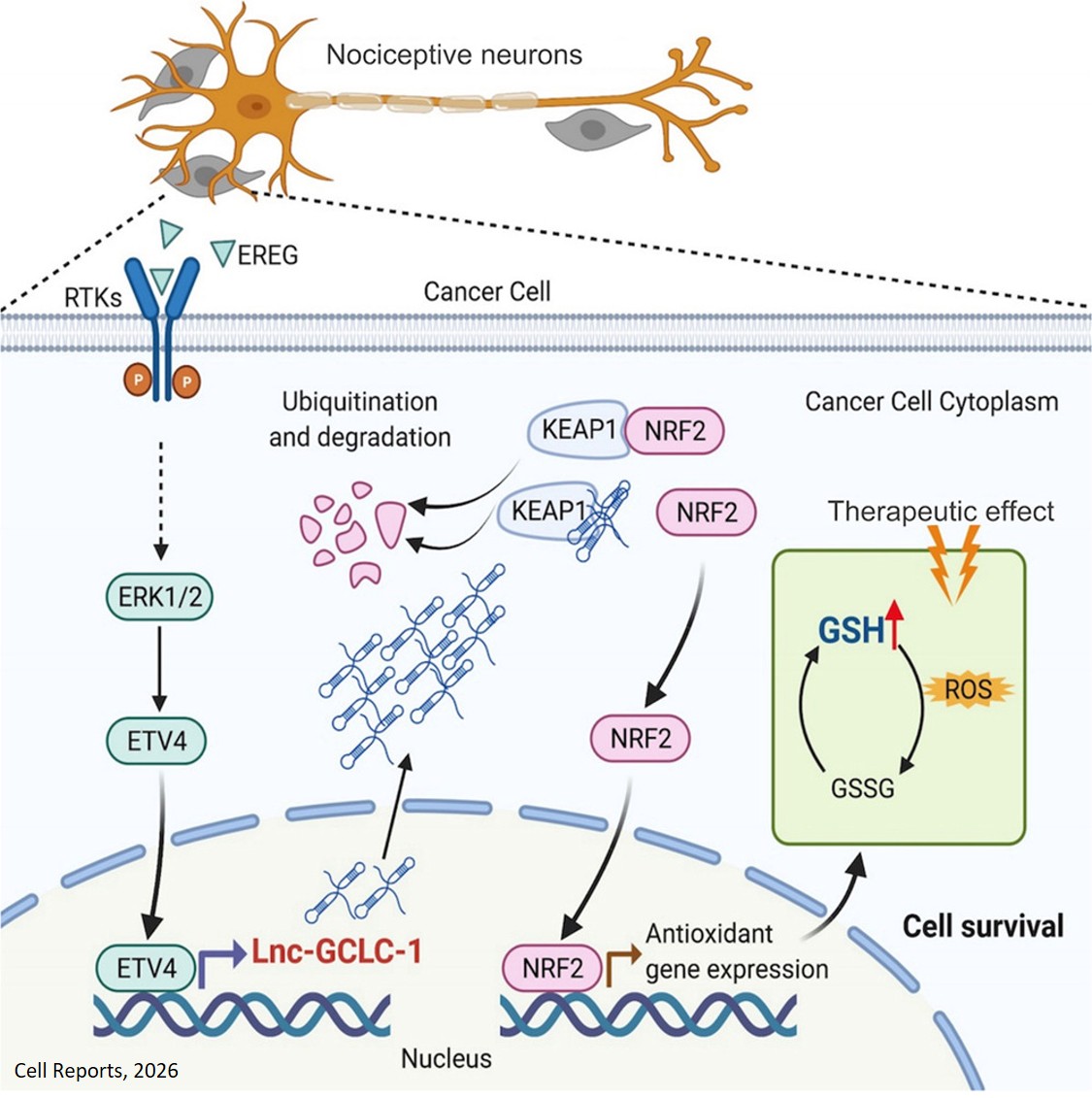
The researchers find that nociceptive neurons, via secretion of epiregulin (EREG), protect HNSCC against oxidative stress-induced cell death.
Mechanistically, EREG increase Lnc-GCLC-1 expression in cancer cells. Increased cellular Lnc-GCLC-1 interacts with and ubiquitinates Kelch-like ECH-associated protein 1 (KEAP1), leading to disruption of the KEAP1-NRF2 interaction and subsequent activation of the NRF2 signaling pathway. This enhances GSH biosynthesis in cancer cells and protects them against cisplatin-induced oxidative stress.
Targeting nociceptive neurons or the EREG-Lnc-GCLC-1-NRF2 axis, improves the therapeutic efficacy of chemotherapies, including cisplatin.
The authors also demonstrate that in patients with HNSCC, high Lnc-GCLC-1 levels correlate with poor prognosis.
https://www.cell.com/cell-reports/fulltext/S2211-1247(26)00164-6
https://sciencemission.com/neurons-protect-cancer-cells