

Inhibiting Wnt/β-catenin-mTOR Signaling Enhances Porphyrin Clearance in Porphyrias with Hepatic Involvement
Annual Clinical Genetics Meeting, March 2026
Oluwashanu Balogun, PhD, MS, Post-Doctoral Fellow, Division of Genetic and Genomic Medicine, Department of Pediatrics, UPMC Children's Hospital of Pittsburgh, and University of Pittsburgh, Kari Nejak-Bowen, PhD, MBA, Oluwashanu Balogun, PhD, MS
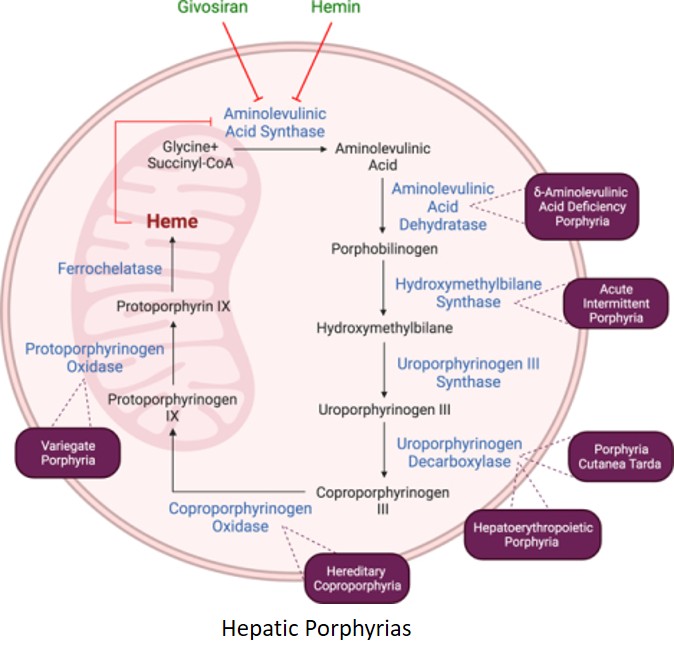
Methods: This work investigates how Wnt/β-catenin signaling, glutamine synthetase (GS) and mechanistic target of rapamycin (mTOR) regulate hepatic porphyrin and heme metabolism, expression of heme biosynthesis genes, autophagy, and mitochondrial function during xenobiotic-induced porphyrin liver injury. Using GS-deficient and mt-Keima reporter mice exposed to DDC and treated with a small-molecule Wnt inhibitor, together with spatial transcriptomics, targeted metabolomics, live confocal imaging, high-resolution respirometry, transmission electron microscopy (TEM), and traditional molecular biology techniques, we identify a novel Wnt/β-catenin-GS-mTOR signaling axis that coordinates transcriptional, metabolic, and organelle responses to porphyrin injury. Complementary immunohistochemical analysis of human liver samples from patients with Acute Intermittent Porphyria (AIP), Porphyria Cutanea Tarda (PCT), and non-porphyria controls (n=3-4 per group) was performed to assess β-catenin, key heme biosynthesis enzymes, and the lysosomal marker LAMP1.
Results: Loss of Wnt signaling suppressed DDC-induced activation of porphyrin biosynthesis genes, normalized heme precursor accumulation, and enhanced autophagy, the recycling process that maintains cellular homeostasis. GS deletion similarly suppressed the accumulation of heme precursors and biosynthesis genes, primarily by limiting intracellular glutamine availability, a critical substrate for heme production. Combined Wnt inhibition and GS deletion further amplified autophagy, increasing the formation and clearance of autophagosomes, and reduced porphyrin accumulation, establishing distinct but complementary roles for these pathways in hepatic homeostasis.
Additionally, Wnt inhibition restored mitophagy (the selective autophagic removal of dysfunctional mitochondria) during DDC-induced hepatic injury, whereas GS deletion primarily modulated mitochondrial respiration. This work proposes that persistent Wnt activation during porphyria upregulates mitochondrial biogenesis and heme biosynthesis genes, while suppressing mitochondrial clearance, thus driving excess production and accumulation of toxic heme precursors that worsen injury. Loss of Wnt signaling attenuates this transcriptional overactivation, alleviating precursor overload and improving mitochondrial health. In human liver samples from AIP and PCT patients, immunohistochemical staining revealed disease-specific alterations in β-catenin, heme biosynthesis enzymes (ALAS1 and ALAD), and the lysosomal marker LAMP1, mirroring the inverse relationship observed in mice, where increased Wnt/β-catenin corresponded to reduced autophagy. These findings are consistent with our prior observations that β-catenin deletion enhances autophagy and with current literature describing a bidirectional relationship between Wnt/β-catenin signaling and the cellular recycling system, autophagy.
Conclusion: Our work reveals a previously unrecognized mechanism in which genetic dysregulation within the Wnt/β-catenin-GS-mTOR axis drives porphyria by up-regulating heme biosynthesis genes and overwhelming cellular autophagy and mitochondrial defenses. Therapeutic modulation of this axis may represent a novel strategy to restore hepatic homeostasis and mitigate metabolic liver disease, especially as Wnt inhibitors are now entering in clinical trials.