

Mechanism of cellular senescence in musculoskeletal diseases
Cellular senescence drives the progressive degradation of joint and bone tissues in musculoskeletal diseases by fueling chronic localized inflammation and impairing tissue regeneration.
Research shows that as cells age or experience stress, they enter a state of permanent growth arrest while remaining highly metabolically active. This transition accelerates the onset of widespread conditions such as osteoarthritis (OA), osteoporosis, and intervertebral disc degeneration (IDD).
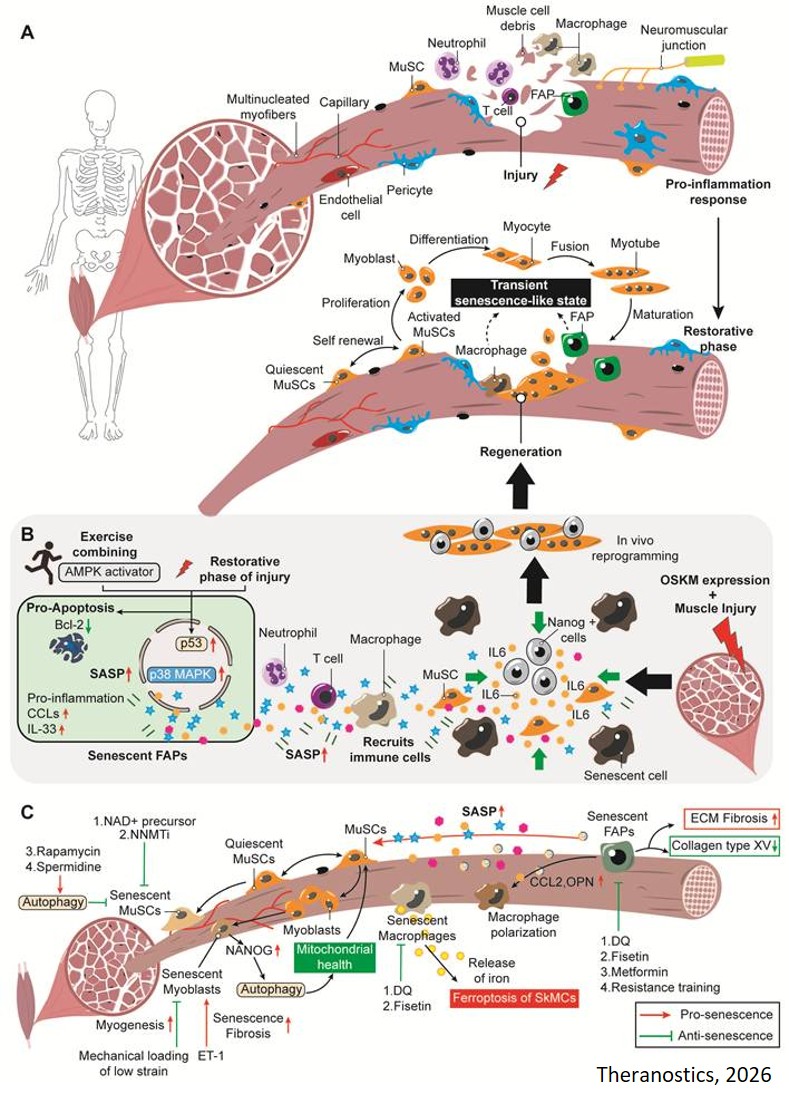
Telomere shortening from repetitive replication, elevated reactive oxygen species (ROS), and mechanical overload force joint cells (chondrocytes, synoviocytes, and osteoblasts) into senescence. These cells secrete the Senescence-Associated Secretory Phenotype (SASP), a potent cocktail of pro-inflammatory cytokines (IL-1β, IL-6), chemokines (IL-8), and matrix metalloproteinases (MMP-1, MMP-13). SASP enzymes directly break down essential extracellular matrix components like type II collagen and aggrecan, systematically destroying cartilage and bone architecture
Senescent articular chondrocytes and synovial fibroblasts accumulate in the joint. The resulting SASP degrades joint cartilage, triggers chronic synovitis, and causes subchondral bone remodeling, leading to severe pain and joint immobility.
Senescence alters the bone remodeling balance. Senescent osteocytes and osteoblasts overproduce RANKL, which hyper-activates bone-resorbing osteoclasts while halting new bone formation, causing a steep drop in bone mineral density.
Senescent nucleus pulposus and annulus fibrosus cells drive matrix depletion and mechanical failure of the spinal discs, resulting in chronic discogenic back pain.
Clinical therapeutics involves targeting these zombie cells to halt or reverse musculoskeletal decline. Senolytics are small molecules designed to selectively induce apoptosis in senescent cells by temporarily disabling their built-in pro-survival pathways. Instead of killing the cell, senomorphics alter its behavior to suppress the toxic inflammatory output.
Exogenous MSC-derived extracellular vesicles (EVs) are being deployed to deliver healthy microRNAs and proteins to senescent tissue beds, effectively suppressing the SASP and jumpstarting localized matrix repair.