

Enteric neuroimmune interactions in health and disease
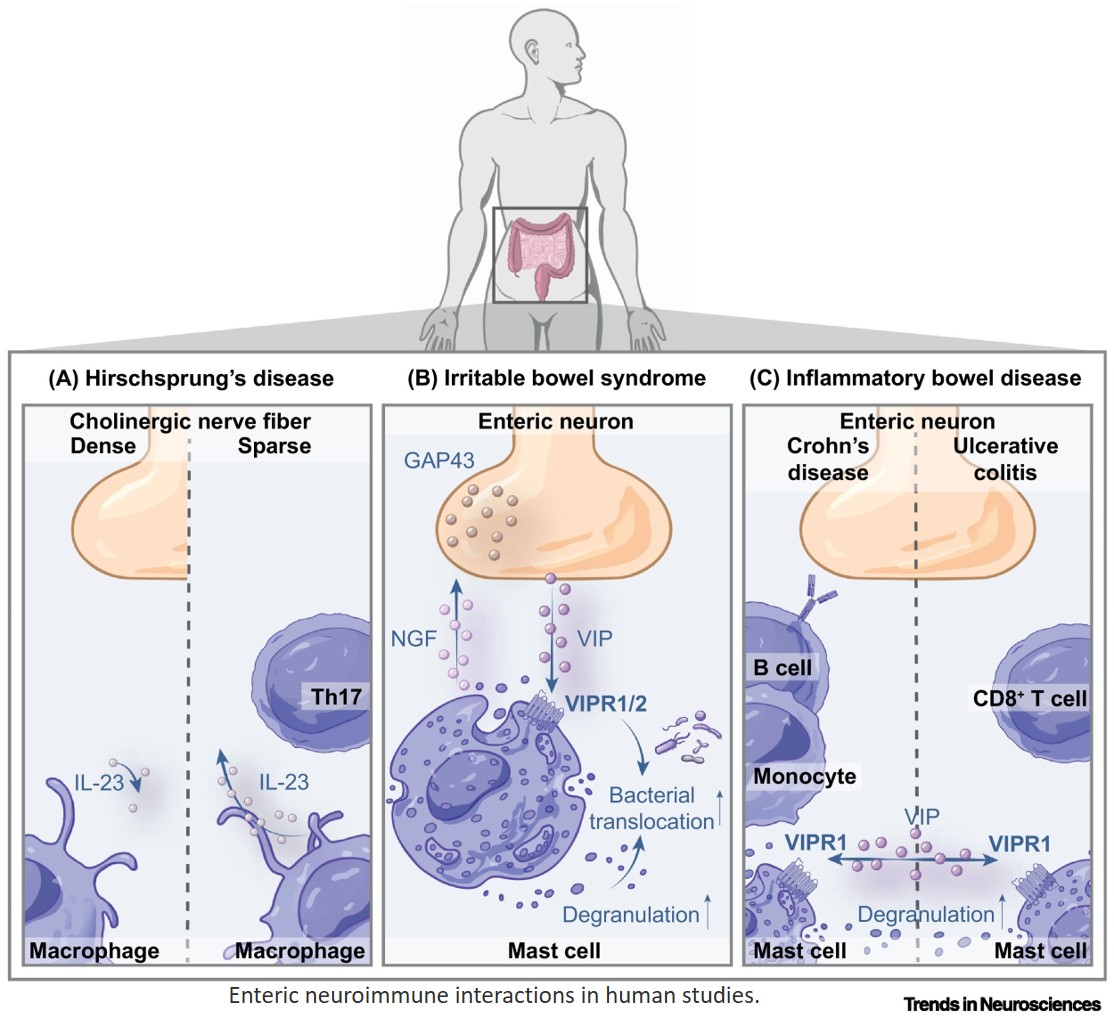
Enteric neurons and intestinal immune cells engage in bidirectional communication across the muscularis and mucosal compartments, forming local neuroimmune circuits that help coordinate gut motility, barrier defense, tissue repair, and adaptation to environmental cues.
Through neuropeptides, neurotransmitters, and cytokines, enteric neurons shape both innate and adaptive immune responses in a compartment-specific manner.
These reciprocal neuroimmune interactions support intestinal homeostasis while being dynamically remodeled during development, aging, infection, and inflammation.
Emerging evidence from Hirschsprung’s disease, irritable bowel syndrome, and inflammatory bowel disease supports the clinical relevance of disrupted enteric neuroimmune interactions in intestinal disorders.
https://www.cell.com/trends/neurosciences/fulltext/S0166-2236(26)00114-1