

Role of splicing dysregulation in CAG repeat expansion diseases
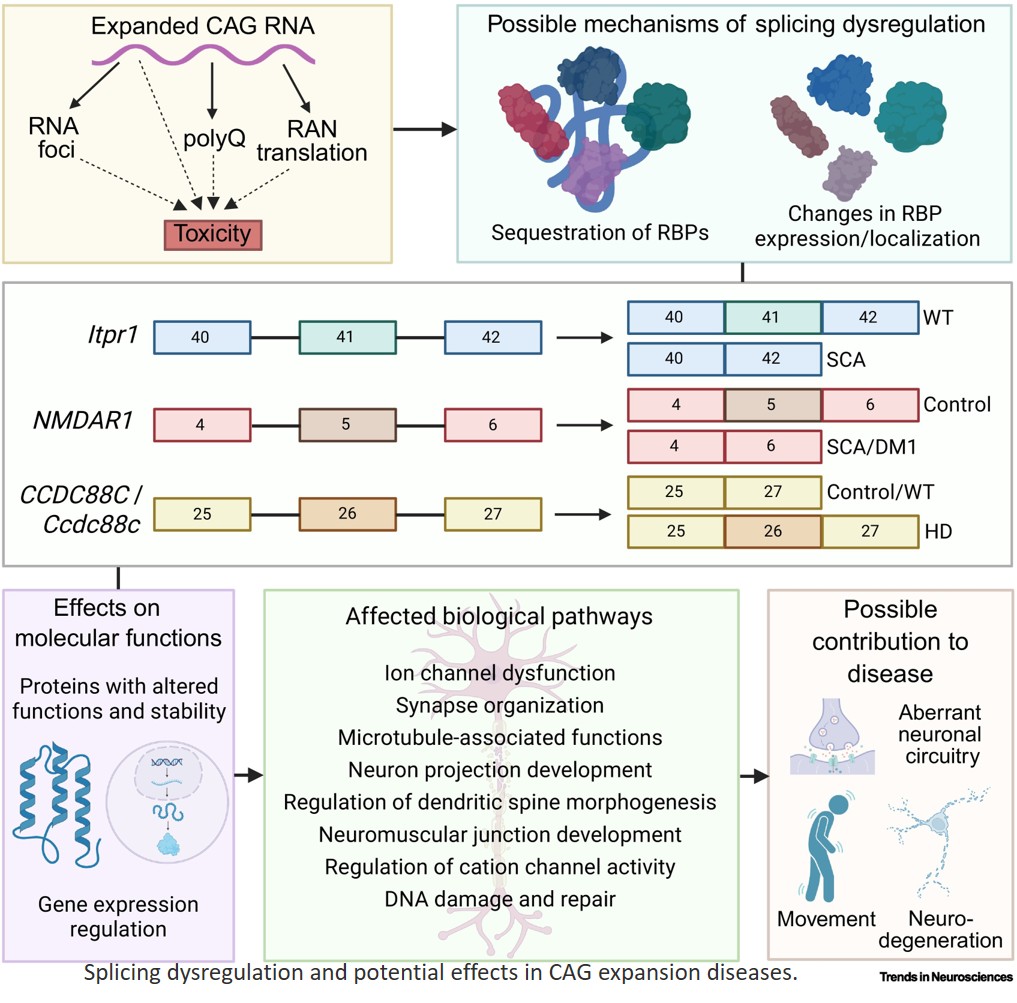
CAG repeat expansion disorders, including Huntington’s disease and several spinocerebellar ataxias, show early molecular changes at the RNA level, centering on dysregulation of alternative splicing.
Evidence from multiple models demonstrates that alternative splicing changes occur prior to neurodegeneration, affecting genes and pathways linked to neuronal function.
Studies in diverse experimental systems indicate that expanded CAG repeats can contribute to splicing dysregulation, in some cases independently of the specific disease gene, supporting a role for repeat-driven splicing alterations.
In preclinical models investigated so far, most mis-splicing events are fully or partially reversible in response to therapeutics, suggesting that they may serve as target-engagement biomarkers, though their translational utility remains to be fully established.
https://www.cell.com/trends/neurosciences/fulltext/S0166-2236(26)00144-X