

Pyruvate kinase M2 dysregulation in Alzheimer’s disease
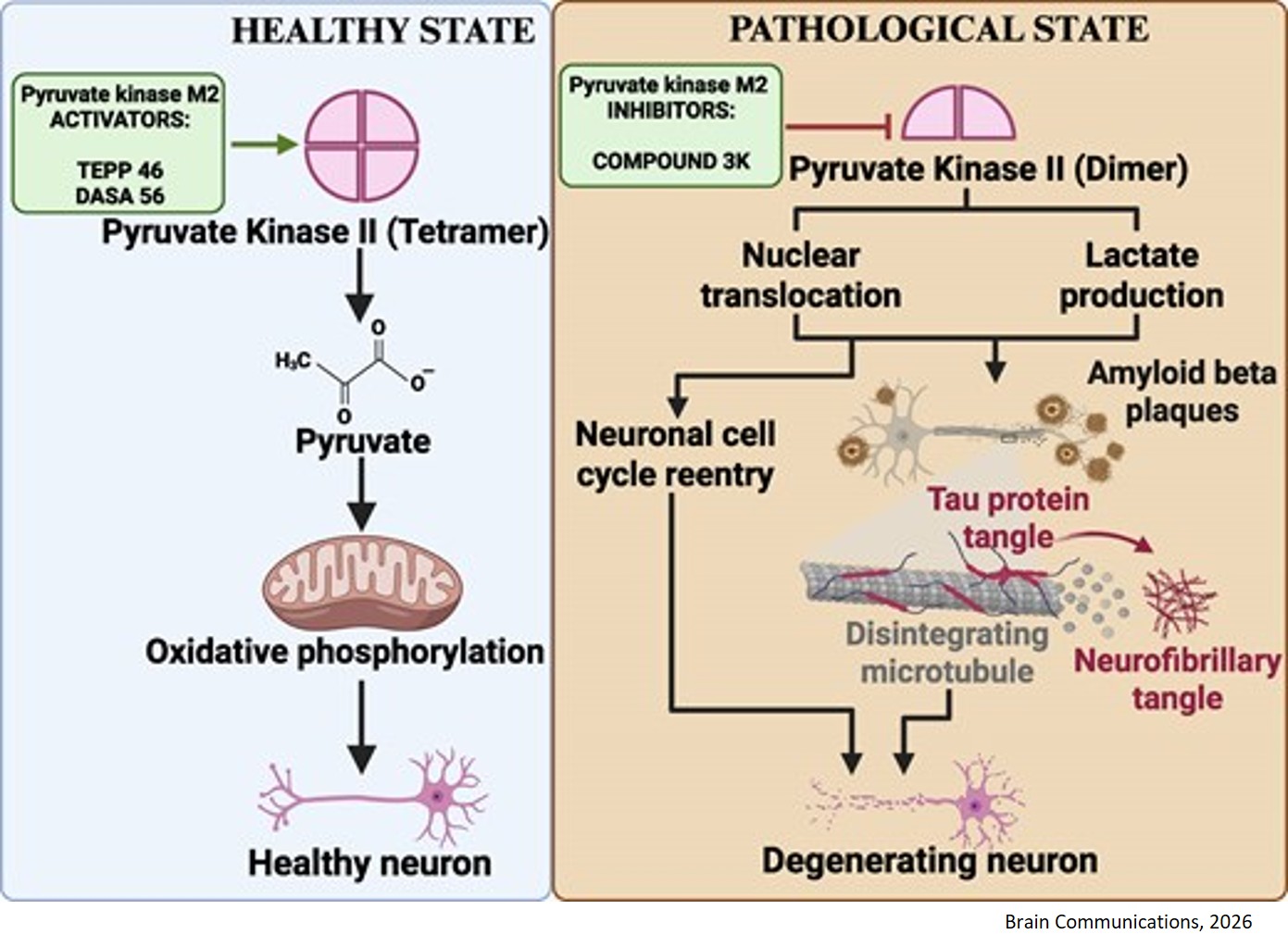
Alzheimer’s disease pathophysiology involves dysregulation of pyruvate kinase M2 (PKM2).
The researchers in this review summarize how PKM2 dysregulation contributes to cognitive decline by driving Warburg-like metabolic reprogramming, altering post-translational modifications and modulating protein–protein interactions in Alzheimer’s disease leading to
Impairment of cell-cycle control, transcriptional regulation and cytoskeletal stability in neuronal cells.
The authors also evaluate the role of PKM2 on neuroinflammation, and its effect on microglia and astrocytes.
The role of natural and synthetic PKM2 modulators in Alzheimer’s disease therapeutics was also discussed including their mechanisms of action and implications.
https://academic.oup.com/braincomms/article/8/2/fcag054/8494553
https://sciencemission.com/PKM2-in-Alzheimer%E2%80%99s-disease